
How long does window tint take to cure?
Sides and back take two to three hours to tint. At New Shade Tint, Alex tells customers they can roll the windows down the same day. The film keeps drying after that: haze and small water pockets are normal for the first couple of weeks and clear on their own, faster in the sun.
How long the install takes
Two to three hours covers the sides and back on most cars, trucks and SUVs at New Shade. Front two windows alone take about an hour. That includes cleaning and scraping every window, cutting the film to the vehicle, shrinking it to the curve of the glass and laying it. A full windshield takes one to two hours. So does removing old film, and that one is hard to predict until the old film starts coming off.
Work is by appointment. You can wait at the shop, but Alex recommends dropping the vehicle off.
The cure, day by day
Film goes on wet. A slip solution lets it slide into place, and most of that water is squeegeed out during the install. A thin layer stays behind, and curing is the time it takes for that moisture to evaporate through the film while the adhesive grips the glass.
| When | What to expect | What to do |
|---|---|---|
| The first few days | The film may look hazy or slightly cloudy. Small water pockets can show. | Use the windows normally. Leave the film itself alone. |
| The first couple of weeks | Haze fades and water pockets shrink, faster on sunny days. | Hold off on cleaning the inside of the glass. |
| After a month | The film should be clear and flat. | If something still looks off, bring it back. |
Weather moves these numbers. Heat and sun speed the cure up, so a car tinted in July and parked outside clears quickly. Cold, damp weeks slow it down. In winter the haze simply takes longer to go.
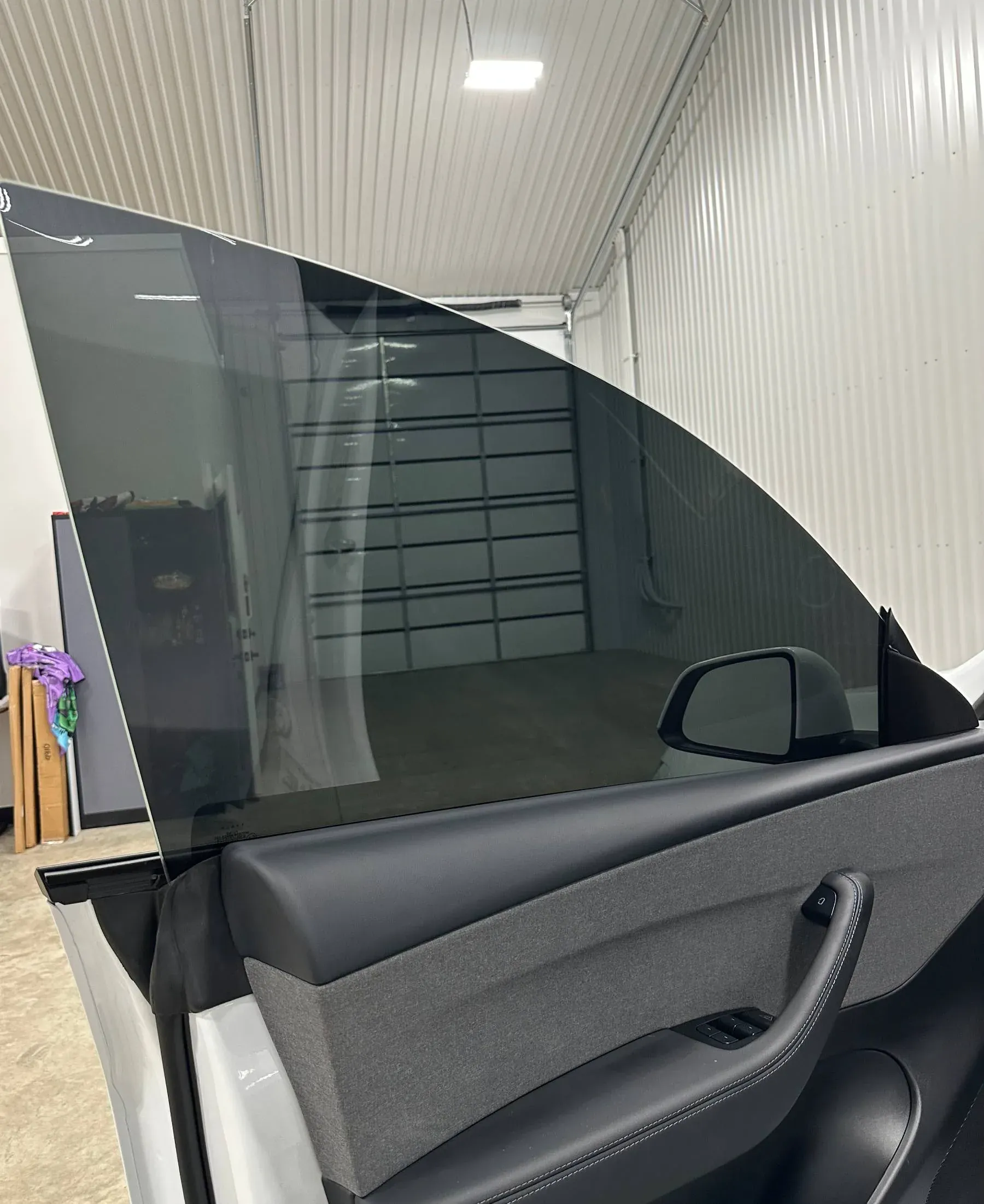
When the windows can go down
A lot of shops tell customers to keep the windows up for three to four days. The worry is the top edge of the film, which runs right to the edge of the glass and passes through the door seal every time the window moves.
Alex tells his customers they can roll the windows down the same day. If he wants you to wait longer on your vehicle, he will say so at pickup. If another shop did your tint, go by what that shop told you.
What is normal
- Haze or a cloudy look. Moisture under the film. It clears as the film dries.
- Small water pockets. They look like soft blisters. They shrink and vanish without help.
- A slightly streaky look in direct sun during the first days, for the same reason.
The fix for all three is time and sunlight. Pressing on a water pocket, poking it with a pin or running a card over it can stretch or mark the film, so leave them be.
What is not normal
Moisture goes away. These do not, and waiting will not help:
- A speck of dirt, a fiber or a hair sealed under the film.
- A crease or a sharp fold line.
- An edge or corner that is lifting off the glass.
- Bubbles or pockets that are still there a month later.
Later on, film that bubbles, peels, cracks or discolors is covered by XPEL's transferable lifetime warranty.
Cleaning tinted glass
Wash the outside of the car whenever. The film is on the inside of the glass. For the inside, wait until the film has cured, then use an ammonia-free glass cleaner and a soft microfiber cloth. Ammonia is the ingredient to avoid, and it is in a lot of household glass cleaners, so check the label.
Keep razor blades, scrub pads and anything abrasive off the film. Be careful with seat belt buckles too. A buckle that snaps back against the glass can chip the film on the door behind it.
When to bring it back
Right away for anything on the "not normal" list. After a month for haze or pockets that have not cleared. XPEL backs the film with a transferable lifetime warranty, and the person who answers the phone is the person who did the work. Call or text (214) 335-0285.
Still deciding on film? Start with ceramic vs carbon vs dyed, check tint percentages for the shade, and see the automotive tint page for how the install goes.